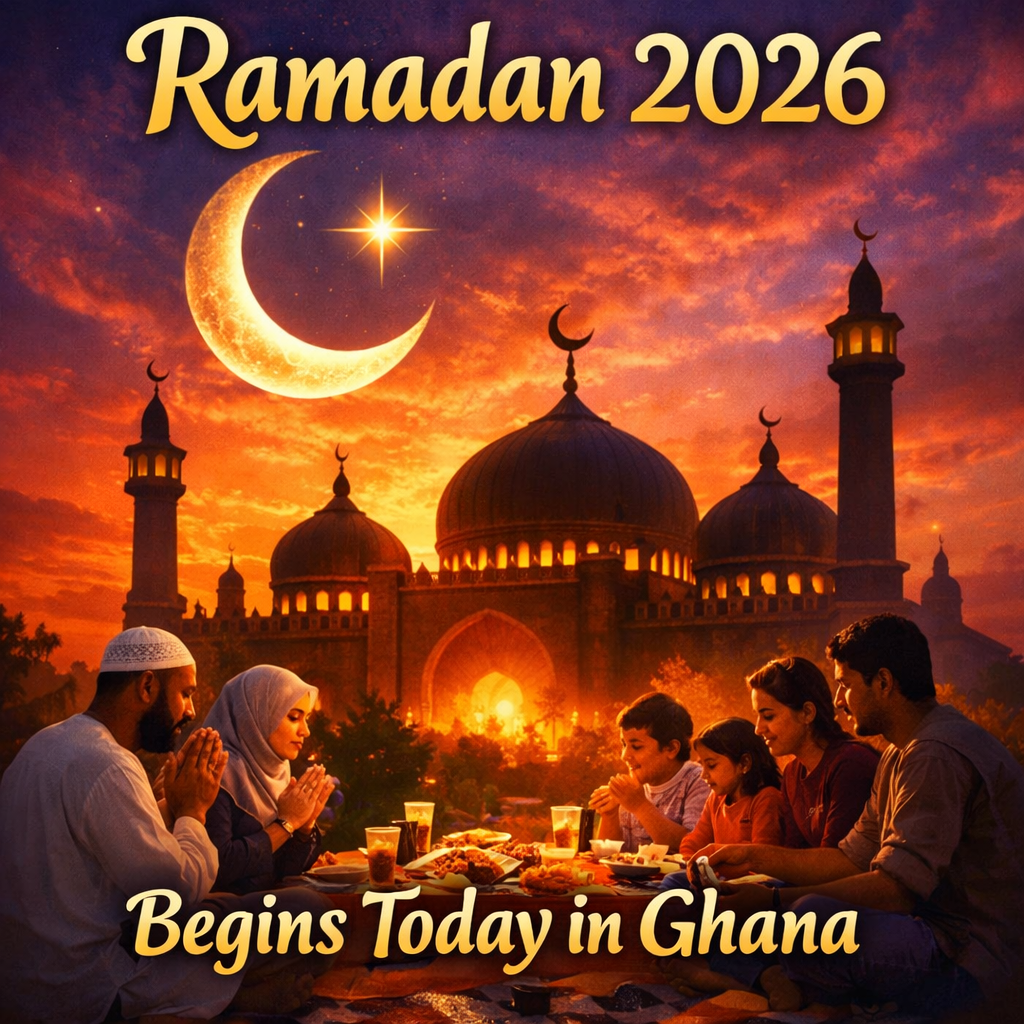
Ahlusunna Wal Jama’a Begins Ramadan Today. Today marks the beginning of the holy month of Ramadan in Ghana, as officially announced by the Ahlusunna Wal Jama’a, one of the country’s most respected Islamic organizations. This announcement has been met with widespread excitement and devotion among Ghanaian Muslims, who are preparing to embark on a month-long spiritual journey of fasting, prayer, reflection, and community engagement. Ramadan, the ninth month of the Islamic lunar calendar, holds profound religious significance as it commemorates the revelation of the Holy Quran to Prophet Muhammad (PBUH).
For millions in Ghana, this month represents a time to purify the soul, strengthen family and community ties, and deepen their relationship with Allah through acts of worship and charity.
Significance of Ramadan in the Ghanaian Muslim Community
In Ghana, Islam is practiced by a significant portion of the population, particularly in the northern regions, where communities actively uphold Islamic traditions. The commencement of Ramadan is not merely a ritual observance; it is a spiritual revival, reminding Muslims of the principles of discipline, empathy, and gratitude. By abstaining from food, drink, and negative behavior from dawn (Suhur) to sunset (Iftar), believers cultivate patience, self-control, and mindfulness. Families gather at sunset to break their fast with dates and water, followed by hearty meals that often include traditional Ghanaian dishes like rice balls, fufu, and soup, blending religious observance with cultural heritage.
The Role of Ahlusunna Wal Jama’a in Determining Ramadan Dates
The Ahlusunna Wal Jama’a plays a pivotal role in Ghana’s Muslim community by determining the official dates of Ramadan based on moon sightings and astronomical calculations. This year, after careful observation, the organization confirmed that the crescent moon marking the start of Ramadan is visible, prompting the official declaration. Their announcement ensures uniformity across the country, preventing confusion and fostering a sense of unity among Muslims. The organization also provides guidance on prayer times, Taraweeh schedules, and religious activities, making it a central authority in Ghana’s Islamic observance.
Preparations and Traditions During Ramadan in Ghana
As the announcement spreads, Muslim communities across Ghana engage in extensive preparations. Homes are cleaned and decorated, and families stock up on essential ingredients for Suhur and Iftar meals. Markets experience increased activity as fresh produce, dates, and spices are in high demand. Many mosques also organize community Iftar programs, where the less fortunate are invited to share meals, reflecting the Quranic emphasis on charity and communal solidarity.
Spiritual Practices and Prayer During Ramadan
Ramadan is distinguished not only by fasting but also by intensified spiritual practices. Ghanaian Muslims dedicate additional time to daily prayers (Salah), recitation of the Quran, and night prayers (Taraweeh). Mosques conduct special lectures and Quranic studies to enhance understanding of the Holy Book and its practical application in daily life. The month is also seen as an opportunity to engage in self-reflection, seek forgiveness, and strengthen moral character, fostering a holistic approach to spiritual growth.
Health Considerations During Fasting
While Ramadan emphasizes spiritual growth, health remains a priority. Nutritionists and religious leaders in Ghana advise fasting Muslims to maintain balanced Suhur meals with protein, complex carbohydrates, and hydration to sustain energy throughout the day. Hydrating adequately during non-fasting hours and avoiding excessive fried or sugary foods ensures that the body remains strong to participate in prayers and community activities. The combination of spiritual discipline and careful health management enables believers to observe Ramadan safely and effectively.
Charity and Community Engagement in Ramadan
One of the defining aspects of Ramadan is Zakat and Sadaqah, acts of obligatory and voluntary charity. Ghanaian Muslims often use this month to support local communities, including providing food, clean water, and educational support to those in need. Ahlusunna Wal Jama’a Begins Ramadan Today. Mosques and Islamic organizations frequently coordinate large-scale charity drives, distributing meals and essentials to orphans, the elderly, and underprivileged families, reflecting the compassionate spirit of Ramadan and fostering social cohesion.
Cultural Expressions and Festivities in Ramadan
Ramadan in Ghana is not only a religious observance but also a cultural celebration. Traditional music, storytelling, and communal gatherings enhance the spiritual atmosphere, creating a sense of joy and unity. Ahlusunna Wal Jama’a Begins Ramadan Today. Families often prepare elaborate Iftar feasts, and children participate in activities that blend faith with cultural heritage, ensuring that the month is a meaningful experience for all generations. This combination of religious devotion and cultural expression makes Ramadan a deeply cherished period in Ghanaian society.
Global Context: Ghana’s Ramadan Amid the Worldwide Muslim Community
The observance of Ramadan in Ghana aligns with the global Muslim community, where millions of believers worldwide fast simultaneously, creating a shared spiritual experience. Ghanaian Muslims participate in this global rhythm through synchronized prayer timings, Quranic reflections, and charitable efforts, fostering a sense of unity and solidarity with the worldwide Ummah. Ahlusunna Wal Jama’a Begins Ramadan Today. This global connection enhances the significance of Ramadan, reinforcing the message of empathy, compassion, and spiritual renewal across borders.
Impact of Ramadan on Daily Life and Economy
Ramadan also affects daily routines and economic activity in Ghana. Work hours in some sectors are adjusted to accommodate fasting schedules, while markets experience a surge in demand for food items and religious supplies. The hospitality and culinary sectors, in particular, thrive during this period, as families and communities gather for Iftar. Ahlusunna Wal Jama’a Begins Ramadan Today. The month-long observance demonstrates how religious practices influence not only personal spirituality but also the broader socio-economic environment.
Role of Technology and Social Media in Observing Ramadan
In modern Ghana, technology plays an increasingly important role in facilitating Ramadan observances. Mobile apps and websites provide accurate prayer times, moon sighting updates, and religious guidance, helping believers plan their daily routines. Social media platforms allow mosques and Islamic organizations to broadcast sermons, lectures, and community announcements, ensuring that even those in remote areas can remain connected to spiritual activities. This integration of tradition with technology enhances participation and engagement throughout the holy month. Ahlusunna Wal Jama’a Begins Ramadan Today.
Encouraging Youth Participation in Ramadan
Muslim youth in Ghana are encouraged to actively participate in Ramadan through structured programs in schools, mosques, and community centers. Activities such as Quran competitions, religious quizzes, and charity initiatives are designed to foster a sense of responsibility and deepen understanding of Islamic teachings. By engaging young Muslims, communities ensure the continuity of religious traditions while nurturing a generation that appreciates the spiritual, moral, and cultural dimensions of Ramadan. Ahlusunna Wal Jama’a Begins Ramadan Today.
Environmental and Sustainable Practices During Ramadan
Many Ghanaian communities are increasingly adopting eco-friendly practices during Ramadan. Initiatives include reducing food waste during Iftar, using sustainable packaging for community meals, and promoting energy-efficient lighting in mosques. These practices reflect an awareness of the ethical and environmental responsibilities emphasized in Islamic teachings, allowing Ramadan observance to align with modern sustainability goals. Ahlusunna Wal Jama’a Begins Ramadan Today.
Ahlusunna Wal Jama’a Begins Ramadan Today
The official announcement by the Ahlusunna Wal Jama’a marks the beginning of a month of spiritual reflection, communal harmony, and charitable action in Ghana. As Muslims embark on this sacred journey, the emphasis on fasting, prayer, and empathy reinforces core values that transcend religious boundaries. Ramadan remains a period of unity, self-discipline, and moral rejuvenation, contributing to both personal growth and societal cohesion. Ahlusunna Wal Jama’a Begins Ramadan Today. Ghanaian Muslims embrace this time with devotion, mindful of the profound lessons that the holy month imparts to every believer.
FAQs
1. What time does the Ramadan fast begin in Ghana?
The fast begins at dawn (Suhur), following the official moon sighting announcement by the Ahlusunna Wal Jama’a.
2. How long does Ramadan last in Ghana?
Ramadan lasts for 29 to 30 days, depending on the lunar calendar and moon sightings, ending with the celebration of Eid-ul-Fitr.
3. Are there community programs for Iftar in Ghana?
Yes, many mosques and Islamic organizations organize community Iftar programs, inviting both the needy and community members to share meals.
4. Can children participate in Ramadan fasting?
Children are encouraged to participate gradually and under parental guidance, focusing on shorter fasting periods and religious education.
5. How does Ramadan influence Ghanaian society?
Ramadan impacts daily life, business hours, and social interactions, fostering a spirit of charity, unity, and cultural celebration across the country.