



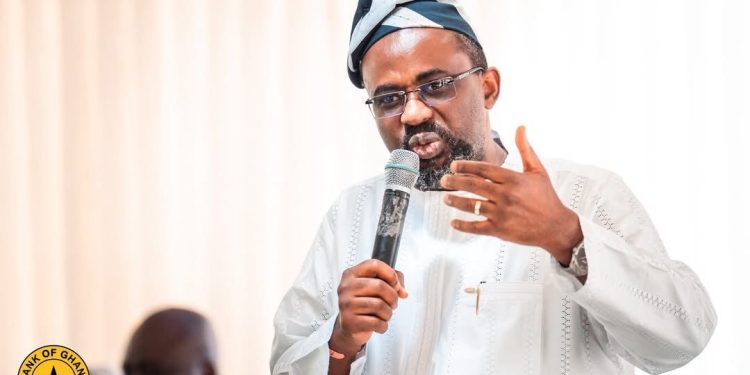
BoG Governor Highlights Tough Trade-Offs in Monetary Policy Decisions
The Governor of the Bank of Ghana, Dr Johnson Pandit Asiama, has shed light on the complex and often difficult decisions involved in managing Ghana’s monetary policy, stressing the constant balancing act between controlling inflation and supporting economic growth.
Central Banking: A Game of Trade-Offs
Speaking at the Governor’s Roundtable during the Kwahu Business Forum 2026, Dr Asiama explained that central banking is fundamentally about making tough choices.
According to him, policymakers are frequently faced with competing priorities that require careful judgement.
“The work we do is always about trade-offs… trying to strike the right balance,” he noted.
This statement highlights the reality that decisions taken by the central bank often come with both benefits and costs, especially when trying to stabilize the economy.
Balancing Inflation and Economic Growth
One of the key challenges identified by the Governor is the need to balance inflation control with economic expansion.
Monetary policy tools, such as interest rate adjustments and liquidity control, are used to manage inflation. However, these same measures can slow down borrowing and investment, thereby affecting economic growth.
Dr Asiama emphasized that while Ghana has made significant economic progress, these gains have not come without sacrifices. Efforts to stabilize inflation and restore confidence in the economy often require strict financial measures that may have short-term impacts on businesses and households.
Ghana’s Economic Recovery and Stability
Reflecting on recent economic performance, the Governor pointed to improvements in Ghana’s macroeconomic indicators, particularly in 2025.
He highlighted that the Ghanaian cedi has remained relatively stable, attributing this to disciplined monetary policy and effective economic management.
“The cedi is stable and under control,” he stated, reinforcing confidence in the country’s financial direction.
This stability comes after a period of economic challenges, including high inflation and currency depreciation. The central bank’s interventions have played a crucial role in restoring stability and rebuilding investor confidence.
The Cost of Stability
Despite the progress, Dr Asiama acknowledged that achieving stability has come at a cost.
Tight monetary policies, including efforts to reduce excess liquidity in the system, have required significant financial commitment and discipline. These measures, while necessary, can place pressure on credit availability and economic activity in the short term.
However, the Governor stressed that such sacrifices are essential for long-term economic sustainability and resilience.
Stakeholder Engagement at Kwahu Business Forum
The Kwahu Business Forum 2026 brought together key stakeholders, including policymakers, business leaders, investors, and development partners, to discuss strategies for driving economic growth in Ghana.
The forum served as an important platform for dialogue on policy direction, investment opportunities, and the role of monetary policy in shaping the country’s economic future.
Conclusion
Dr Asiama’s remarks underscore the delicate balancing act faced by central banks worldwide. In Ghana’s case, the focus remains on maintaining price stability while supporting sustainable economic growth.
As the economy continues to recover, the Bank of Ghana is expected to remain cautious and strategic in its policy decisions, ensuring that gains made are preserved without undermining future growth.
Ultimately, the Governor’s message is clear: economic stability does not come easy, and every policy decision involves critical trade-offs that shape the nation’s financial future.
