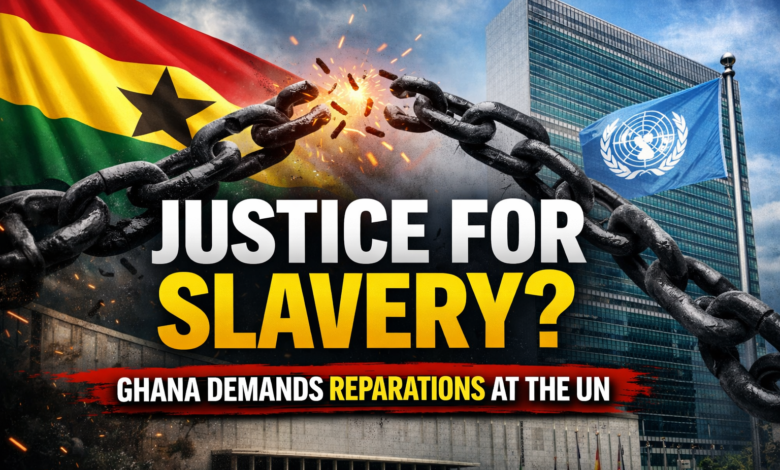
Ghana Demands Justice for Slavery at UN. Ghana is once again stepping onto the global stage with a bold and historic move that is already sparking debate across continents. The West African nation is preparing to present a resolution at the United Nations seeking formal recognition of slavery as one of the gravest crimes against humanity—and pushing for reparations.
Table of Contents
This development places Ghana at the center of a long-standing global conversation about justice, accountability, and historical redress. For many Africans and people of African descent around the world, this move is not just political—it is deeply emotional and symbolic. Ghana Demands Justice for Slavery at UN.
A Historic Push at the Global StageThe proposed resolution will be presented at the United Nations, the world’s most influential international body. Ghana aims to build a coalition of African and Caribbean nations to support the motion, making it a unified call rather than a single-country initiative.
At the heart of the proposal is a demand for the international community to acknowledge slavery not just as a past event, but as a crime with lasting consequences that continue to affect millions today.
Why This Matters Now
The conversation around reparations has gained momentum in recent years, especially within the African diaspora. Countries and institutions are increasingly being called upon to confront their roles in the transatlantic slave trade.
Ghana’s move comes at a time when:
- There is growing global awareness of racial injustice
- African nations are asserting stronger voices in global affairs
- The economic gap between developed and developing nations remains a key issue
By raising this issue at the United Nations, Ghana is amplifying a conversation that many believe is long overdue. Ghana Demands Justice for Slavery at UN.
What Are Reparations?
Reparations refer to compensation given to groups that have suffered injustices. In this case, it involves financial, institutional, or symbolic compensation for the centuries-long exploitation of African people through slavery. Ghana Demands Justice for Slavery at UN.
Supporters argue that:
- The wealth of many Western nations was built on slavery
- African nations were economically destabilized
- The effects of slavery are still visible today
Critics, however, question:
- Who should pay?
- Who should receive the compensation?
- How would it even be calculated?
Global Reactions: Support and Resistance
While many African and Caribbean countries are expected to support Ghana’s proposal, some Western nations are likely to resist it. This sets the stage for a major global debate that could dominate international headlines. Ghana Demands Justice for Slavery at UN.
Supporters say:
“This is about justice, not charity.”
Opponents argue:
“Today’s generations should not pay for past actions.”
This divide is exactly what makes the story highly engaging and controversial.
Ghana’s Growing Influence
This move further strengthens Ghana’s position as a leading voice in Africa on global issues. Over the years, Ghana has built a reputation for:
- Political stability
- Diplomatic leadership
- Advocacy for African unity
By championing this cause, Ghana is not only addressing historical injustice but also shaping future global policies.
The Bigger Picture for Africa
This is bigger than Ghana alone. If successful, this resolution could:
- Open doors for reparations discussions worldwide
- Influence economic negotiations between Africa and the West
- Strengthen unity among African nations
It could also redefine how history is taught, acknowledged, and addressed on a global scale.
What Happens Next?
The proposal will go through debates and negotiations at the United Nations. The outcome is uncertain, but one thing is clear: the conversation has already started, and it is gaining momentum. Ghana Demands Justice for Slavery at UN.
Whether or not reparations become a reality, Ghana’s bold move has ensured that the world cannot ignore this issue any longer.
Ghana Demands Justice for Slavery at UN
Ghana’s demand for justice at the United Nations is more than just a political move—it is a statement. A statement that history matters. A statement that accountability matters. And most importantly, a statement that Africa is ready to speak—and be heard.