




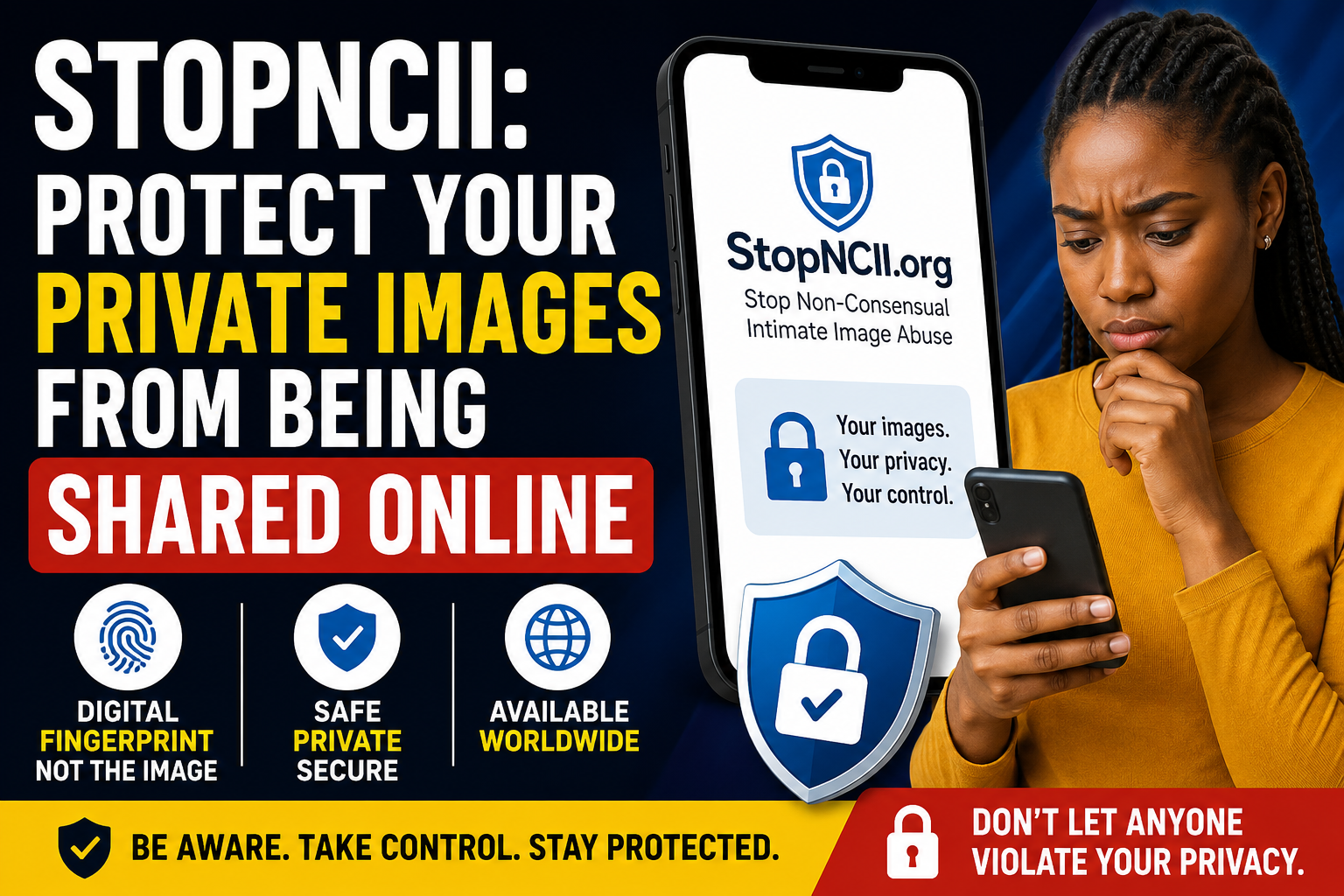
Learn how StopNCII helps protect adults from non-consensual intimate image sharing and what to do if your private images are threatened.
Imagine waking up one morning to discover that a private photo or video you once shared with someone you trusted is being circulated online without your permission.
For many people, that fear is not hypothetical. Private images can be used to threaten, embarrass, blackmail or humiliate someone, especially after a relationship ends or when an online conversation turns abusive.
But there is a tool many people still do not know about: StopNCII.org.
StopNCII is designed to help adults protect themselves against the sharing of intimate images and videos without their consent. It uses technology that allows participating online platforms to identify matching content without requiring the original image or video to be uploaded to StopNCII itself.
What is StopNCII?
StopNCII stands for Stop Non-Consensual Intimate Image Abuse.
It is a free online tool created by Meta and the non-profit organisation SWGfL to help people who are at risk of having intimate images or videos shared without their permission.
The service is available internationally. You do not have to live in the United Kingdom to use it.
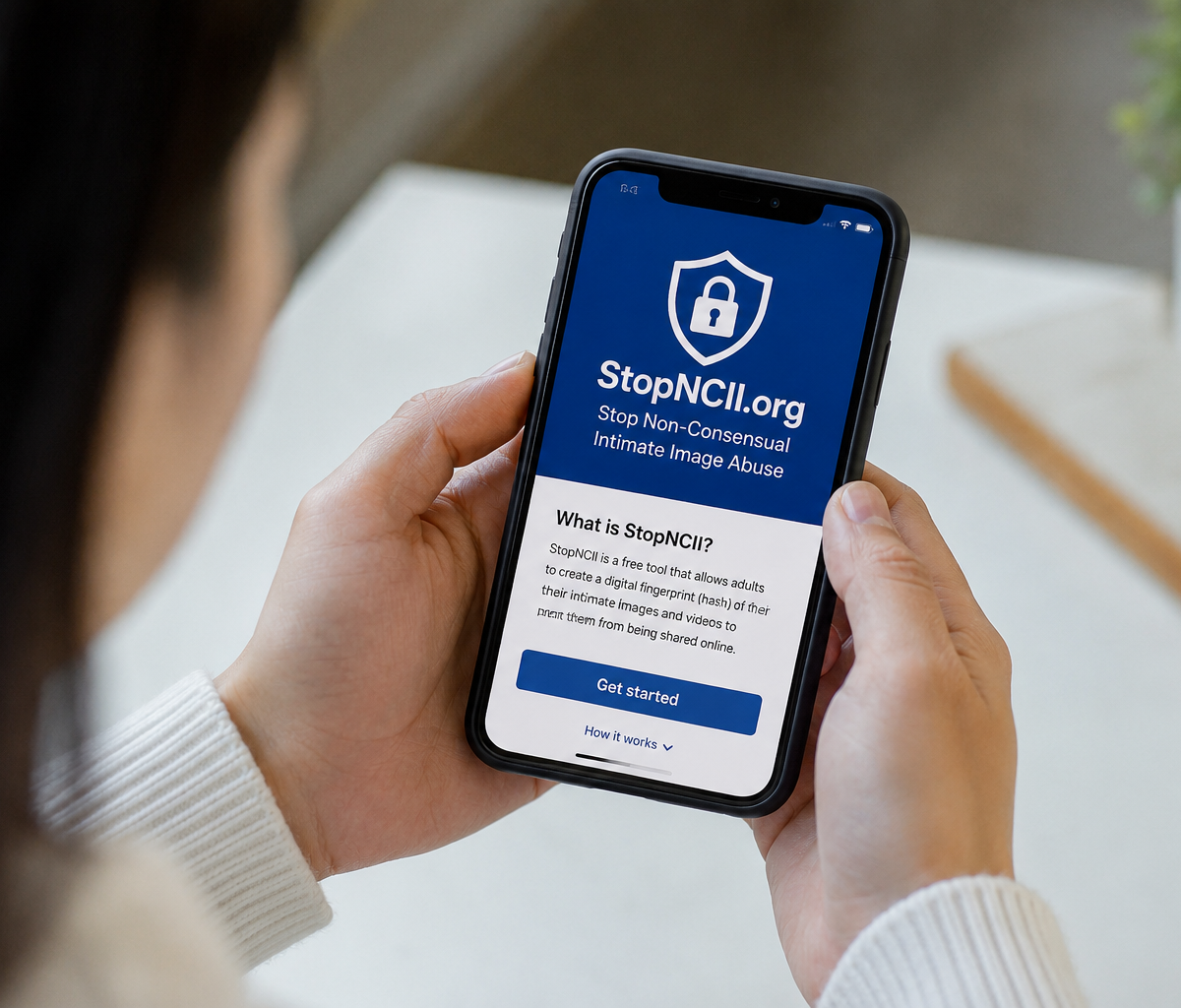
The basic idea is simple: instead of sending your private photo or video to StopNCII, the service creates a unique digital fingerprint, known as a hash, from the file on your device.
That hash can then be shared with participating companies so their systems can look for matching content.
Your actual image or video remains on your device during this process.
How does StopNCII work?
The technology behind StopNCII may sound complicated, but the process is fairly straightforward.
First, you select the intimate image or video you want to protect.
StopNCII then creates a digital fingerprint of the file directly on your device. The fingerprint is what is submitted to StopNCII’s database, rather than the original image or video.
If someone later tries to upload a matching image to a participating platform, that platform can compare the content against the hash and take action according to its policies.
This means StopNCII can provide an additional layer of protection without requiring you to hand over the original private file.
Once a case has been successfully created, you receive a case number and a password that can be used to check its status. StopNCII warns users to keep these details safe because they cannot be recovered if lost.
What kind of images can StopNCII protect?
StopNCII is specifically designed for non-consensual intimate images and videos.
According to its current eligibility requirements, the person creating the case must be shown in the image or video, the content must be intimate in nature, and the person must have been over 18 when the content was created.
The service accepts nude, semi-nude or sexual images that you do not consent to having published online.
It can also accept certain synthetic, fake or AI-generated intimate images involving the person submitting the case.
However, StopNCII is not a general-purpose tool for every type of abusive content.
For example, screenshots of text conversations and audio recordings are not accepted through the service.
What if someone is threatening to leak your private images?
This is one of the situations where people should know about StopNCII before a serious problem develops.
If someone is threatening to publish your intimate photos or videos, you do not necessarily have to wait until they appear online before taking action.
StopNCII recommends creating a case when you are worried that your intimate images may be shared.
It is also important to preserve evidence of the threat.
Take screenshots of relevant messages, usernames, profile information, dates and other details that may help establish what happened. Do not delete important evidence simply because you are embarrassed or frightened.
If the person is demanding money, more images or anything else in exchange for not publishing the content, avoid making decisions under pressure. Consider reporting the account and seeking appropriate support.
What if the images have already been posted?
StopNCII can still be useful, but there is an important distinction.
If your private images have already been shared online, it recommends reporting the content directly to the platform where it appears. You can also add the images to StopNCII for future protection.
This matters because StopNCII does not remove content from the entire internet.
It only works with participating platforms and services.
So, if an image appears on a website that does not participate in StopNCII, you may need to use that website’s own reporting and removal process.
Does StopNCII upload your private photos?
No.
This is one of the most important things for people to understand.
According to StopNCII, the hash is created on your device and the original image or video remains on your device. The hash, rather than the actual intimate content, is submitted to the service.
StopNCII also says that its tool does not collect or retain users’ names, email addresses or phone numbers. An email address can optionally be provided to receive a case number, and the organisation says that email addresses used for this purpose are retained for three days through a separate platform.
That privacy-focused approach is one reason the service can be useful for people who are understandably uncomfortable sending intimate material to another organisation.
Is StopNCII available in Ghana?
Yes.
You do not have to be located in the UK to use StopNCII. The service says it can be used by people anywhere in the world, provided they meet its eligibility requirements.
This is particularly important in countries such as Ghana, where awareness of online sexual extortion and the misuse of private images is increasingly important.
Young adults and social media users should understand that sharing an intimate image with someone does not automatically give that person permission to publish or distribute it.
Trust can change. Relationships can end. Accounts can be compromised. Images can also be obtained through deception or coercion.
Knowing what to do before a problem occurs can make a major difference.
What StopNCII cannot do
StopNCII is useful, but it is not a magic button that can erase an image from the internet.
There are several limitations users should understand.
It does not cover the entire internet
StopNCII works with participating platforms. It cannot automatically remove an image from every website, social network or private service on the internet.
It does not replace reporting
If an image has already been posted, you should also report it directly to the platform involved.
Encrypted messaging services are different
StopNCII says it does not work on encrypted services in the same way because hashing technology cannot be applied to most encrypted messaging environments.
It is for adults depicted in the content
If the person was under 18 when the image or video was taken, StopNCII is not the appropriate service.
The organisation directs people to specialist services such as Take It Down for content involving someone who was under 18.
What should you do if you become a victim of image-based abuse?
First, remember that the victim is not responsible for someone else’s decision to abuse their privacy.
Do not allow embarrassment to stop you from seeking help.
If intimate images have been shared or someone is threatening to share them:
- Keep evidence of the abuse. Save relevant messages, usernames, links and screenshots.
- Do not give in to threats simply because you are scared. Consider seeking advice before responding.
- Report the content or account using the platform’s reporting tools.
- Use StopNCII if you are eligible, particularly when you are worried that the images may be shared or reshared.
- Tell someone you trust. Facing online abuse alone can make an already difficult situation much worse.
- Seek professional or legal support where appropriate.
The most important thing is to act rather than remain silent because of shame.
Think before you share intimate images
Technology can help reduce the harm caused by image-based abuse, but prevention remains important.
Before sending an intimate photograph or video, consider what could happen if the file were copied, saved, forwarded or accessed by someone else.
No security measure is perfect.
That does not mean people should live in fear of technology. It means they should understand the risks and make informed decisions about what they share, who they share it with and where those files may eventually end up.
Parents, teachers, journalists, community leaders and digital safety advocates also have a role to play in educating people about these risks.
StopNCII is a tool people should know about
Many people only search for help after their private images have already been leaked.
By then, the situation can become much harder to control.
StopNCII offers an important preventive option for eligible adults who are concerned about non-consensual sharing of intimate images. Its hash-based approach allows participating platforms to look for matching content without requiring the original image or video to be uploaded to StopNCII.
But awareness is just as important as the technology itself.
If you use social media, communicate through messaging apps or share personal content online, take a few minutes to learn how image-based abuse works and what options are available if it happens to you or someone you know.
Knowing about StopNCII before you need it could help you respond faster when it matters most.
For more information and to check whether you qualify, visit the official StopNCII.org website.
