




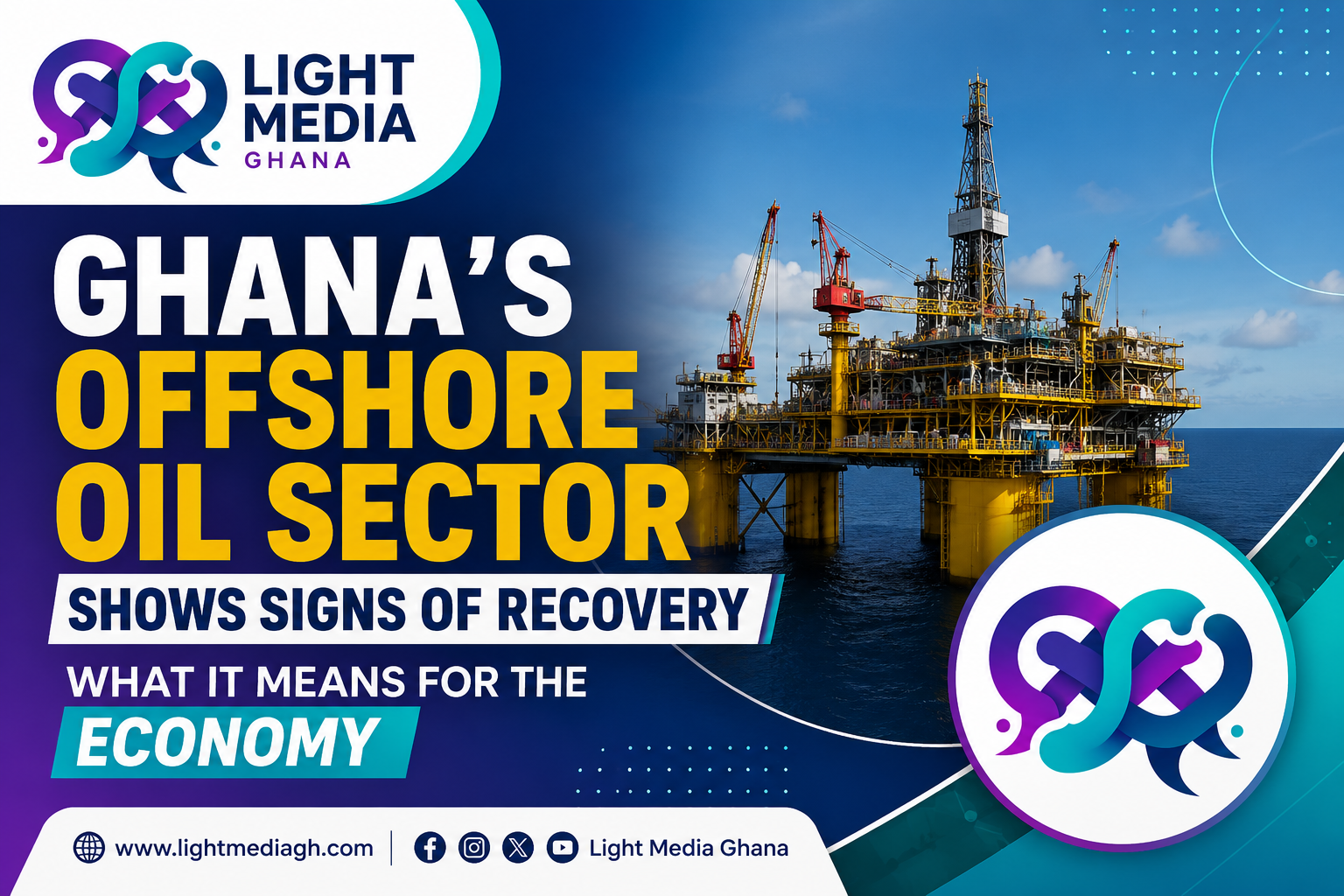
Ghana’s offshore oil sector is showing strong signs of recovery as new drilling campaigns boost production and attract fresh investment. Here’s what it means for the economy.
Ghana’s offshore oil sector is showing encouraging signs of recovery after several years of declining crude oil production, giving renewed hope for economic growth, higher government revenue, and increased investor confidence. The latest developments in the country’s upstream petroleum industry suggest that Ghana is entering a new phase of growth, supported by successful drilling campaigns, renewed international interest, and strategic government policies aimed at revitalizing the sector.
For many Ghanaians, the performance of the oil and gas industry goes beyond energy production. It directly influences government revenue, infrastructure development, employment opportunities, foreign investment, and the overall strength of the economy. With fresh momentum building in the sector, experts believe the coming years could be pivotal for Ghana’s energy future.
Ghana Offshore Oil Sector Records Positive Momentum
One of the strongest indicators of the recovery is the progress being made at the Jubilee Oil Field, Ghana’s largest producing offshore oil field.
According to recent industry updates, five of the six planned wells under the current drilling campaign have already been completed successfully. Oil production at the Jubilee Field has now exceeded 94,000 barrels per day, with the final production well expected to come on stream later this year. This marks one of the strongest production performances recorded in recent years after a prolonged period of declining output.
Industry analysts believe these developments demonstrate that sustained investment and modern drilling technology are beginning to reverse years of falling production.
Why Ghana’s Offshore Oil Sector Declined
Although Ghana has been an oil-producing nation since commercial production began in 2010, the industry has faced numerous challenges over the past decade.
Several mature oil wells naturally experienced production decline as they aged. At the same time, uncertainty in global energy markets, reduced investment following the COVID-19 pandemic, and delayed exploration activities slowed the pace of new discoveries.
Lower crude production translated into reduced petroleum revenues for the government, affecting national budgets and development financing.
However, the latest drilling activities indicate that these challenges are gradually being addressed through renewed investment and improved operational efficiency.
Ghana Offshore Oil Sector Attracts Fresh Investment
The recovery is not only about increasing production. It is also about rebuilding investor confidence.
Officials from the Petroleum Commission have confirmed that international oil companies are once again showing strong interest in Ghana’s upstream petroleum industry. During the 2026 Africa Energy Technology Conference, the Commission noted that global investors increasingly view Ghana as one of Africa’s stable and attractive energy destinations.
The Commission highlighted growing interest from major international companies and ongoing discussions aimed at expanding exploration activities in Ghana’s offshore basins. It also confirmed continued engagement with global energy companies to promote new investment opportunities.
This renewed confidence could pave the way for additional exploration projects, technology transfer, and employment opportunities within Ghana’s oil and gas value chain.
Economic Benefits of the Ghana Offshore Oil Sector Recovery
A stronger offshore oil industry could have significant benefits for Ghana’s economy.
Higher Government Revenue
Increased oil production means higher petroleum revenues through royalties, taxes, and profit-sharing agreements. These funds can support investments in education, healthcare, roads, and other public services if managed effectively.
Increased Foreign Direct Investment
A growing oil sector often attracts international investors looking for stable energy markets. New investments can stimulate broader economic activity and encourage partnerships with local businesses.
Job Creation
The upstream petroleum industry creates employment opportunities for engineers, geologists, technicians, offshore workers, logistics providers, marine operators, and many supporting service companies.
As drilling activities expand, more opportunities may become available for Ghanaian professionals and businesses through local content initiatives.
Stronger Energy Industry
An active offshore sector also supports Ghana’s long-term energy security by maintaining domestic crude production while encouraging continued investment across the petroleum value chain.
Government’s Strategy to Support Growth
The Ghanaian government continues to implement measures aimed at making the country’s petroleum sector more competitive.
These efforts include reviewing regulatory frameworks, encouraging exploration in frontier basins, strengthening investor engagement, and improving the investment climate for upstream petroleum operations. The Petroleum Commission’s 2026 Business Outlook also projects increased operational activity as government reforms continue to support exploration and infrastructure development.
Industry stakeholders believe these reforms will help sustain production growth while positioning Ghana as one of West Africa’s leading offshore oil producers.
Challenges Still Remain
Despite the encouraging progress, experts caution that the recovery should be viewed with realistic expectations.
Global crude oil prices remain volatile and are influenced by international geopolitical events, supply disruptions, and changing demand patterns.
The global transition toward cleaner energy also presents long-term challenges for oil-producing countries, requiring Ghana to balance petroleum development with investments in renewable energy and sustainable economic diversification.
Furthermore, continued exploration and production require significant capital investment, advanced technology, and stable government policies.
Maintaining investor confidence will therefore remain essential.
What the Recovery Means for Ordinary Ghanaians
While offshore oil production happens far from Ghana’s coastline, its effects can eventually be felt across the country.
Higher petroleum revenues may strengthen public finances, support development projects, and improve economic stability. Increased investment can create jobs, boost local businesses, and expand opportunities for Ghanaian contractors participating in the oil and gas supply chain.
Although stronger production alone will not solve every economic challenge, it provides an important opportunity for Ghana to maximize the value of its natural resources while investing in long-term national development.
Looking Ahead
The renewed momentum in Ghana’s offshore oil sector represents one of the most positive developments for the country’s energy industry in recent years.
Successful drilling campaigns, renewed international investor interest, and supportive government reforms indicate that the sector is gradually regaining strength after years of declining production.
If these gains continue and are supported by responsible resource management, Ghana’s offshore oil sector could become an even stronger contributor to economic growth, employment, and national development over the coming years.
For investors, businesses, and citizens alike, the recovery offers renewed optimism that one of Ghana’s most valuable industries is moving in the right direction.
