




Mahama Scraps Blanket Medical Tax Waivers. President John Dramani Mahama has announced a major policy change regarding tax exemptions on imported medical equipment in Ghana.
Under the new approach, the government will no longer approve automatic or blanket tax waivers for healthcare equipment imports. Instead, all future exemption requests will be reviewed individually and assessed based on merit, national importance, and healthcare impact. Mahama Scraps Blanket Medical Tax Waivers.
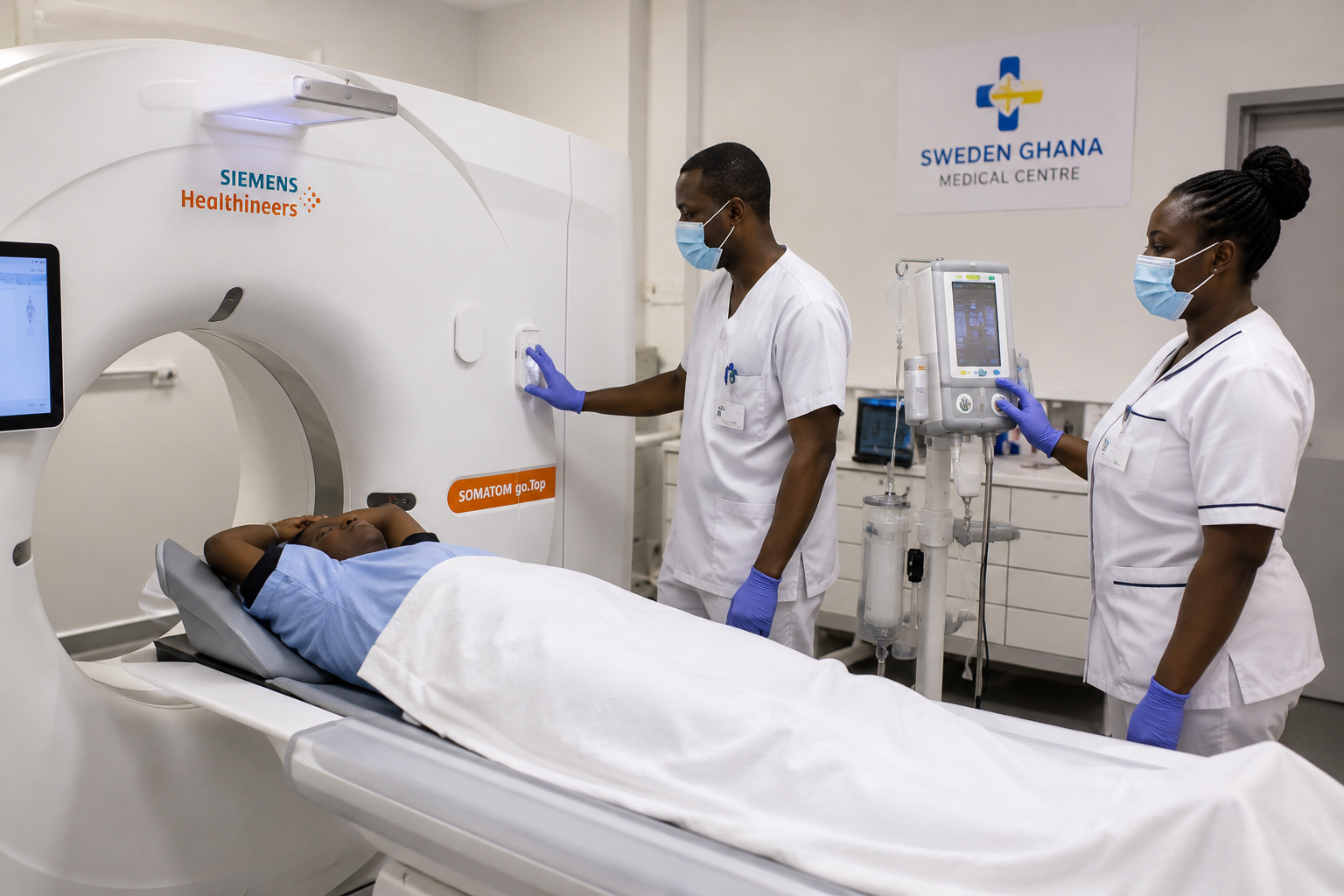
The announcement was made during the commissioning of a modern Positron Emission Tomography Computed Tomography (PET-CT) scan facility at the Sweden-Ghana Medical Centre in Accra.
According to President Mahama, the government still recognizes the importance of supporting healthcare investments, but tax exemptions must now be more carefully managed to improve transparency, accountability, and revenue generation.
Mahama Announces New Tax Exemption Policy
Speaking at the commissioning ceremony, President Mahama explained that healthcare institutions importing specialized equipment can still apply for tax exemptions.
However, approvals will no longer be automatic.
Instead, the government will evaluate each application separately before making a decision.
The President emphasized that the policy is designed to ensure exemptions are granted only where there is genuine national benefit.
He assured stakeholders in the healthcare sector that requests involving critical medical technologies would still receive serious consideration. Mahama Scraps Blanket Medical Tax Waivers.
The new directive represents a significant shift in Ghana’s approach to tax expenditures and public revenue management.
Why Ghana Is Ending Blanket Tax Waivers
The decision comes at a time when Ghana continues efforts to strengthen fiscal discipline and improve domestic revenue mobilization.
Over the years, economic analysts and financial experts have raised concerns about the growing cost of tax exemptions and their impact on government revenue.
Reports from the Ministry of Finance have shown that tax expenditures continue to place pressure on the national budget.
Critics of blanket exemptions argue that such policies often lead to:
- Revenue leakages
- Reduced government income
- Weak transparency in approval processes
- Abuse of exemption privileges
- Inefficient allocation of public resources
By ending automatic waivers, the government hopes to create a more controlled and transparent system that focuses only on essential sectors and high-impact investments.
The move also aligns with Ghana’s broader economic recovery strategy aimed at improving fiscal sustainability.
What the New Policy Means for Medical Equipment Importers
Under the revised framework, healthcare providers and institutions importing medical equipment will need to submit formal exemption applications for government review. Mahama Scraps Blanket Medical Tax Waivers.
Each request will likely require stronger documentation and justification before approval is granted.
This means importers may need to clearly demonstrate:
- The medical importance of the equipment
- The potential impact on healthcare delivery
- The benefits to patients and public health
- Why tax relief is necessary
Although blanket waivers are ending, the government has indicated that essential and specialized healthcare technologies may still qualify for exemptions on a case-by-case basis.
Industry observers believe the new approach could improve accountability while still supporting critical healthcare investments. Mahama Scraps Blanket Medical Tax Waivers.
PET-CT Facility Expected to Improve Cancer Diagnosis in Ghana
President Mahama made the announcement during the inauguration of a state-of-the-art PET-CT scan facility at the Sweden-Ghana Medical Centre in Accra.
The advanced imaging technology is expected to significantly improve cancer diagnosis and treatment monitoring in Ghana.
PET-CT scanning combines detailed imaging with metabolic analysis, helping doctors detect diseases such as cancer more accurately and at earlier stages.
For many years, patients requiring advanced diagnostic imaging often had to travel abroad for treatment and testing.
This created major financial and emotional burdens for families.
According to President Mahama, the new facility represents a major milestone in Ghana’s healthcare modernization efforts.
He noted that improving local access to specialized diagnostic services will help reduce medical tourism while strengthening confidence in Ghana’s healthcare system.
Ghana Wants to Become a Regional Medical Hub
President Mahama also outlined government’s long-term ambition to position Ghana as a leading healthcare destination in West Africa.
According to him, improved medical infrastructure could eventually attract patients from neighboring countries seeking specialized treatment and advanced diagnostic services. Mahama Scraps Blanket Medical Tax Waivers.
Countries mentioned included:
- Nigeria
- Côte d’Ivoire
- Togo
- Burkina Faso
The President explained that Ghana’s investment in modern healthcare technology forms part of a broader strategy to expand specialist medical services nationwide.
Healthcare experts believe such investments could help strengthen Ghana’s reputation within the regional healthcare sector.
MahamaCares Initiative to Support Cancer Patients
During the event, President Mahama disclosed that the PET-CT facility would operate under the Ghana Medical Trust Fund initiative, popularly known as “MahamaCares.”
The initiative is expected to provide financial assistance to eligible cancer patients for diagnosis and treatment.
Cancer treatment remains expensive for many Ghanaian families, and healthcare advocates have consistently called for stronger public support systems to ease the burden on patients.
The President acknowledged the financial difficulties faced by many families caring for relatives with cancer and stressed the need for accessible healthcare support.
Government Expanding Specialized Healthcare Infrastructure
President Mahama also revealed that government is expanding specialized healthcare infrastructure across the country. Mahama Scraps Blanket Medical Tax Waivers.
Some of the projects highlighted include:
New Catheterization Laboratories
The government has procured catheterization laboratories for:
- Korle Bu Teaching Hospital
- Komfo Anokye Teaching Hospital
- Tamale Teaching Hospital
These facilities are expected to improve cardiovascular treatment and emergency heart care services.
Regional Hospital Expansion
Government also plans to construct additional regional hospitals in newly created regions to improve healthcare accessibility nationwide. Mahama Scraps Blanket Medical Tax Waivers.
Development of Cardiology Centres
Plans are underway to establish more cardiology centres across the country as part of efforts to strengthen specialist healthcare delivery.
According to the President, these investments will help reduce pressure on referral hospitals while improving access to quality healthcare services.
Economic Analysts React to the Policy Shift
Economic and policy analysts say the government’s decision could improve efficiency within Ghana’s tax exemption system.
Many experts believe stricter oversight will help reduce unnecessary revenue losses while ensuring tax incentives are directed toward projects with measurable national value. Mahama Scraps Blanket Medical Tax Waivers.
However, some healthcare stakeholders may still advocate for flexible exemptions on essential medical technologies because of the high cost associated with importing advanced equipment.
Observers say the success of the new policy will depend largely on how effectively the government balances fiscal discipline with healthcare sector support.
Benefits of the New Tax Waiver System
Supporters of the new approach believe it could deliver several long-term benefits for Ghana’s economy.
Potential advantages include:
- Increased government revenue
- Improved transparency in exemption approvals
- Better accountability within the tax system
- Reduced abuse of tax waiver privileges
- More targeted support for critical sectors
The policy could also strengthen investor confidence by creating clearer rules for exemption approvals.
Challenges Healthcare Providers May Face
Despite the potential benefits, some healthcare providers may face challenges under the new framework.
Possible concerns include:
- Longer approval processes
- Increased documentation requirements
- Delays in importing essential medical equipment
- Higher operational costs for healthcare institutions
Industry experts say efficient processing systems will be important to prevent disruptions in healthcare delivery.
Frequently Asked Questions
What did Mahama say about tax waivers?
President Mahama stated that Ghana will no longer grant blanket or automatic tax waivers on imported medical equipment. Future exemptions will be considered individually.
Will medical equipment still qualify for tax exemptions?
Yes. Healthcare institutions can still apply for tax exemptions, but approvals will now be granted on a case-by-case basis.
Why is the government ending blanket tax waivers?
The policy aims to improve transparency, strengthen fiscal discipline, reduce revenue leakages, and prevent abuse of tax exemption privileges.
What is a PET-CT scan?
A PET-CT scan is an advanced medical imaging technology commonly used for cancer diagnosis, disease monitoring, and treatment planning.
What is MahamaCares?
MahamaCares is the Ghana Medical Trust Fund initiative designed to support eligible cancer patients with diagnosis and treatment costs.
Mahama Scraps Blanket Medical Tax Waivers
President Mahama’s decision to end blanket tax waivers on imported medical equipment marks an important shift in Ghana’s economic and healthcare policy landscape.
While the government seeks to improve revenue generation and tighten oversight within the tax exemption system, it has also signaled continued support for critical healthcare investments.
The introduction of a case-by-case approval process is expected to improve accountability and ensure exemptions are granted based on national interest and healthcare impact.
At the same time, Ghana’s investment in advanced healthcare infrastructure such as PET-CT technology highlights the country’s ambition to strengthen local healthcare delivery and position itself as a regional medical hub in West Africa.
As the policy takes effect, healthcare providers, importers, and investors will be closely watching how efficiently the new exemption framework is implemented.
